
Shedding Light on the Modern Day Light Bulb
 Just a few short years ago, changing a light bulb was simply a matter of selecting one with the correct wattage and properly disposing of the one that had burned out. These days, however, this is the sort of task that can leave you in the dark. We’ve decided that a little blog post is in order to help shed some light on this matter.
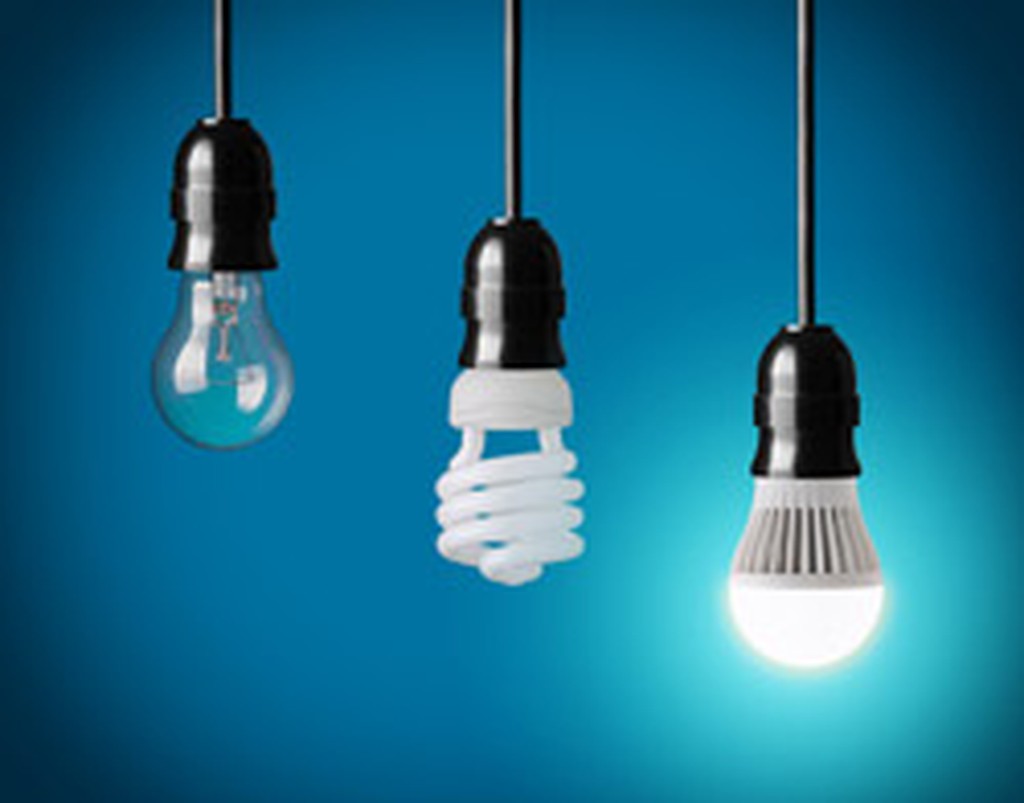
By now, you’ve probably heard that as of January 1, the traditional 40 and 60 watt incandescent light bulbs will no longer be imported to or manufactured in the United States. Consumers now have the option to purchase halogen incandescent, compact fluorescent (CFL), and light emitting diodes (LED).
Halogen incandescents use just over 25% less energy than traditional incandescents, but give off the same light. While they cost several times the amount of a traditional incandescent, halogens pay for themselves in energy savings. They typically last one to two years.
CFLs are those funky looking bulbs with a bluish, glowing light that gained popularity in the 1990s, but the color and lighting has dramatically improved over the past two decades. Again, these light bulbs come at a significantly higher cost, but they last eight to ten years and use about 75% less energy, more than making up for their price.
LEDs are probably the least popular bulbs on the market today, largely due to the cost. Although the initial cost is notably more than halogens or CFLs (60 watt equivalent hovers at just under $10 per bulb, with higher wattage at double that), they use the least amount of energy and last twenty years or more.
The next time you venture to the light bulb aisle, keep in mind that wattage is no longer the magic number in your choice. That title, instead, belongs to lumens – the standard measurement for visible light. Basically, a 60 watt incandescent equivalent is 800 lumens, a 75 watt is 1,100 lumens, and a 100 watt is about 1,600 lumens. Additionally, rather than thinking “soft white,” “bright white,” or “daylight,” you’ll need to consider the correlated color temperature (CCT). For example, the traditional soft white incandescent bulbs have a CCT of 2,700K, while the super bright daylight CFLs are upwards of 5,000K.
The shift to energy efficient lighting and the phasing out of traditional incandescent bulbs may seem confusing initially, but hopefully this helps to clarify what is now available to you. We encourage you to purchase bulbs that have the EPA’s Energy Star Rating and feel good about conserving resources and cutting energy costs.